

A pickup truck is a great choice for winter driving because of its four-wheel drive and higher ground clearance.
This combination gives you better traction and stability when driving in snow and ice.
Additionally, the bed of a pickup truck can be used to store snow shovels, salt, or sand. This is especially useful if you get stuck in the snow and need to clear a path.
In this blog post, we’ll outline some of the best trucks for dealing with snow and ice, as well as provide tips on how to drive in winter weather.
So whether you’re in the market for a new truck or just want to learn more about winter driving, read on!
Best Trucks for Driving in Ice and Snow
Here are 12 models of pickup trucks that are great for winter driving in ice and snow:
1. Chevrolet Silverado 1500
The Chevrolet Silverado 1500 is the best truck for driving in ice and snow for a number of reasons.
First, it has a proven track record of being one of the most reliable trucks on the market.
Second, it comes standard with a number of features that are specifically designed for driving in icy conditions, such as four-wheel drive and an automatic traction control system.
Third, it is powered by a robust V8 engine that provides plenty of power and torque for towing and hauling in snow and ice.
Finally, the Silverado 1500 comes with a host of safety features, including front and rear airbags, antilock brakes, and an electronic stability control system.
Taken together, these factors make the Silverado 1500 the best truck for driving in ice and snow.
2. GMC Sierra 1500
The GMC Sierra 1500 is widely regarded as one of the best trucks for driving in winter. There are a number of reasons for this.
First, the Sierra 1500 is equipped with an advanced traction control system that helps to keep the wheels from slipping on icy roads.
Second, the truck’s four-wheel-drive system provides excellent traction in both dry and wet conditions.
Third, the Sierra 1500’s brakes are designed to provide maximum stopping power in all kinds of weather.
Fourth, the truck’s engine is powerful enough to handle the challenges of driving in winter weather.
In addition, the Sierra 1500 comes standard with a host of other features that make it an ideal choice for driving in ice and snow, such as heated seats, heated mirrors, and remote start.
3. Ford F-150
When it comes to driving in icy and snowy conditions, few trucks can match the Ford F-150. Thanks to its four-wheel-drive system and powerful engine, the F-150 is able to plow through even the deepest snowbanks.
The truck’s large size also makes it stable on slippery roads, and its traction control system helps to prevent skidding.
In addition, the F-150’s high ground clearance helps it to avoid getting stuck in snowdrifts.
And if you do happen to get stuck, the truck’s available integrated tow package can help you get back on the road quickly.
With its many features, it’s no wonder that the Ford F-150 is one of the most popular trucks for driving in winter weather conditions.
4. Ram 1500
The Ram 1500 is one of the most popular trucks on the market, and for good reason. It’s powerful, efficient, and can handle just about any terrain you throw at it. But when it comes to driving in ice and snow, the Ram 1500 really shines.
Thanks to its four-wheel-drive system and advanced traction control, the Ram 1500 can handle even the most treacherous conditions with ease.
And if you need a little extra help getting through deep snow, the optional Snow Chief package includes a set of beefy tires and a plow prep kit.
Whether you’re headed to the mountains or just dealing with a winter storm, the Ram 1500 is the best truck for the job.
5. Toyota Tundra
The Toyota Tundra is consistently ranked as one of the best trucks for ice and snow driving, and there are several reasons why.
First, the Tundra has a relatively long wheelbase, which helps to improve stability on slippery surfaces.
Additionally, the truck’s weight helps it to maintain traction, even on packed snow or icy roads. The Tundra is also equipped with standard four-wheel drive, which further improves traction and control.
Finally, the truck’s engine is designed to maintain optimal power at lower speeds, which is often necessary when driving in winter conditions.
These factors make the Toyota Tundra an ideal choice for those who need a dependable truck for ice and snow driving.
6. Nissan Titan
The Nissan Titan is a full-size pickup truck that is known for its reliability and durability. The Titan is also a great choice for driving in ice and snow.
Thanks to its large size and powerful V8 engine, the Titan can easily plow through deep snow drifts. The truck’s four-wheel-drive system also provides excellent traction on icy roads.
In addition, the Titan’s large tires help to improve its stability in slippery conditions.
7. Honda Ridgeline
The Honda Ridgeline is built for driving in all kinds of weather conditions, including ice and snow. It features a number of design elements that make it well suited for driving in wintery conditions.
For starters, the Ridgeline has a higher ground clearance than most trucks, making it easier to navigate over snowbanks and icy roads.
Additionally, the Ridgeline is equipped with all-wheel drive, providing extra traction and stability on slippery surfaces. The truck also has a special Snow mode setting that helps to prevent skidding and slipping.
Finally, the Ridgeline’s V6 engine provides plenty of power for plowing through deep snowdrifts.
8. Jeep Gladiator
The Jeep Gladiator is a good truck for driving in winter for several reasons. First, it has a powerful engine that can handle difficult terrain.
Second, its four-wheel-drive makes it easy to get traction on slippery roads. Third, its high ground clearance prevents it from getting stuck in deep snow.
Finally, its spacious cab provides plenty of room for passengers and cargo and snow.
9. Chevrolet Colorado
When the weather outside is frightful, you need a truck that can handle anything Mother Nature throws your way. That’s why the Chevrolet Colorado is the best truck for driving in ice and snow.
With standard features like four-wheel drive and an advanced traction control system, Colorado is ready to take on any conditions.
And if you need a little extra help getting through deep snow, Colorado offers an optional diesel engine that provides ample power and torque.
No matter what the weather, you can rest assured that Colorado will get you where you need to go safely and efficiently.
So when the forecast calls for snow, make sure you’re behind the wheel of a Chevrolet Colorado.

10. GMC Canyon
Winter driving can be a challenge, even for experienced drivers. Slick roads and poor visibility can make it difficult to stay in control, and even a small mistake can lead to a serious accident.
That’s why it’s important to have a truck that’s up to the task of handling ice and snow. The GMC Canyon is specifically designed for winter driving, with features like all-wheel drive and heated seats.
It also has a powerful engine that can handle tough conditions, and its spacious cabin provides plenty of room for gear.
In addition, the Canyon comes equipped with advanced safety features that can help you avoid an accident.
With its combination of power, comfort, and safety, the GMC Canyon is the best truck for driving in winter weather.
11. Ford Ranger
The Ford Ranger is a great truck for driving in ice and snow. It has excellent traction and stability. It also has a high ground clearance, which helps it to navigate over obstacles.
Additionally, the Ranger is equipped with a number of features that make it ideal for driving in challenging conditions.
These include front and rear tow hooks, a heavy-duty suspension system, and skid plates.
12. Toyota Tacoma
The key to staying safe is to have a vehicle that can handle the conditions. And when it comes to ice and snow driving, few trucks can match the Toyota Tacoma.
Because of its robust 4-wheel drive system, the Tacoma is able to maintain traction even on the slickest of roads.
And when the roads are covered in deep snow, the Tacoma’s high ground clearance allows it to plow through without getting stuck.
In addition, Tacoma’s high-powered engine provides plenty of torque for climbing hills and accelerating out of turns.
As a result, the Tacoma is the perfect truck for those who need to get around in ice and snow.
Is a Truck or Jeep Better to Drive in Snow?
Let’s be honest—there’s no absolute winner.
It really depends on where you’re driving, the weather’s mood that day, and your personal taste for adventure (or misadventure).
But when the snow piles up and the ice comes out to play, trucks usually take the crown.
Why Trucks Often Rule Winter Roads?
- Weight and Stability: Trucks are heavy hitters. That extra mass helps keep you glued to the road instead of sliding like a penguin on ice.
- Winter-Ready Features: Many trucks boast all-wheel or four-wheel drive, traction control, and heated seats—because nothing says “I’ve got winter under control” like warm buns while conquering slippery streets.
- Ground Clearance: Trucks sit taller, which means they can plow through snowdrifts like they’re parting the Red Sea, while smaller vehicles might get stuck saying, “Hey… wait for me!”
Where Jeeps Shine?
Jeeps are agile and perfect for off-road snow adventures. They can dance through powdery trails with style.
Just don’t expect them to glide gracefully over ice-covered highways—they’re more likely to do a little cha-cha-slide you didn’t ask for.
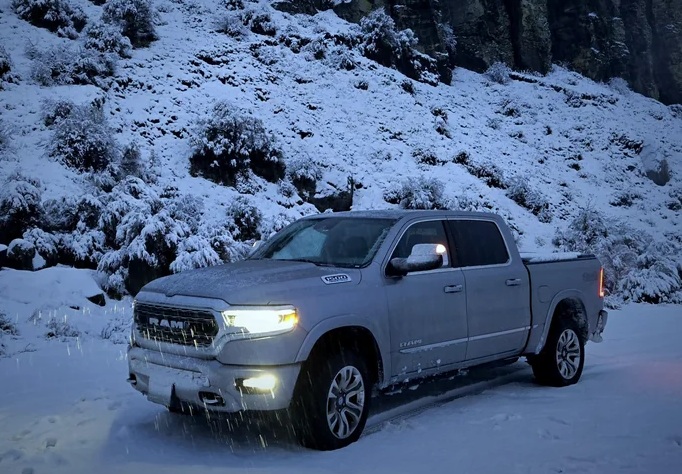
Essential Tips for Driving Your Truck in Ice and Snow
Living in a region with icy roads and heavy snowfall means being extra cautious behind the wheel.
Over the years, I’ve learned that preparation isn’t just smart—it can be lifesaving. Here’s how you can keep yourself and your truck safe this winter:
1. Keep Your Fuel Level Healthy
Always maintain at least half a tank of fuel. Cold temperatures can thicken diesel or gasoline, and running low increases the risk of fuel line freeze-ups, leaving you stranded in the cold.
2. Upgrade Your Traction
Winter tires are specifically designed with deeper treads and softer rubber to grip icy surfaces better. In extreme conditions, consider tire chains—they significantly improve traction on packed snow and ice.
3. Adjust Your Speed and Braking
Slowing down isn’t optional; it’s essential. Ice drastically reduces traction, so give yourself plenty of space for braking. Remember, stopping distance can increase by 3–10 times on icy roads compared to dry pavement.
4. Maximize Visibility
Low winter sun, snow flurries, and fog can reduce visibility to near zero. Use headlights and fog lights appropriately, and keep your windshield and mirrors clear of ice.
5. Avoid Cruise Control
Cruise control may feel convenient, but on slippery roads, it can cause your wheels to spin uncontrollably if you hit black ice. Manual control is the safest way to maintain traction.
6. Carry a Winter Emergency Kit
Even the most experienced drivers can get caught in a storm. Stock your truck with essentials: blankets, gloves, a shovel, traction mats, ice scraper, flashlight, extra food, and water. These items can make a huge difference if you get stuck.
7. Use Engine and Brake Awareness
For diesel trucks especially, avoid sudden throttle inputs. Gentle acceleration prevents wheel spin, and engine braking can help maintain control without locking your wheels on slippery descents.
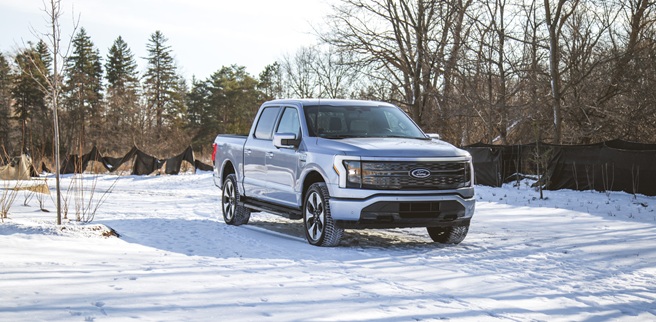
What to Look for a Pickup Truck That’s Perfect for Snowy Driving?
Driving in snow is no joke—one wrong move, and your truck could end up doing an unplanned ice dance.
If you want a pickup that can handle winter roads with confidence, here’s what to look for:
1. Four-Wheel or All-Wheel Drive
This is non-negotiable. AWD or 4WD distributes power to all wheels, giving you traction on slippery roads and helping you conquer icy inclines without sliding sideways.
2. Weight and Ground Clearance
A heavier truck helps with stability, while higher ground clearance lets you power through snowdrifts that would leave lighter vehicles stranded. Think of it as your truck wearing snow boots.
3. Winter Tires
Even the best truck can’t escape physics—grippy winter tires are essential. Look for deep treads and softer rubber compounds designed specifically for snow and ice.
4. Traction Control and Stability Systems
Modern pickups come with traction control, electronic stability programs, and hill descent control. These systems act like a second pair of hands on icy roads, preventing slips before you even notice them.
5. Heated Features
Heated seats, mirrors, and steering wheels don’t improve traction—but they do make winter driving far less miserable. Comfort counts when you’re navigating frozen highways.
6. Engine and Braking Awareness
Diesel pickups can be trickier in the cold, so look for models with block heaters or glow plugs. Anti-lock brakes (ABS) and engine braking help keep control when stopping on slick surfaces.
7. Bed and Cargo Considerations
Extra weight in the bed can improve rear-wheel traction—but avoid overloading, which can compromise braking. Balance is key.
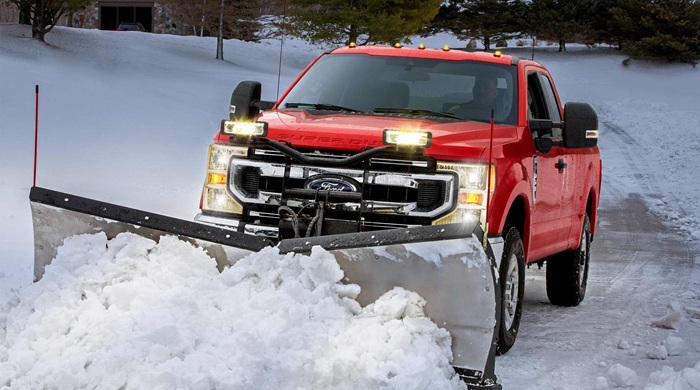
Pickups vs. Light-Duty Trucks vs. SUVs: Which is Best for Snow Plowing?
When it comes to plowing snow, pickup trucks are often the first choice for a reason.
Their heavy-duty frames can handle the stress of a snow plow, while four-wheel or rear-wheel drive gives excellent traction on icy surfaces.
The bed of a pickup also allows you to add weight over the rear axle, improving stability and control as you push through deep snow.
If you want reliability and confidence during long winter plowing sessions, a pickup is hard to beat.
Light-duty trucks can also be effective for snow clearing, especially if your plowing needs are moderate.
They are easier on fuel and still offer four-wheel drive and decent ground clearance.
While lighter than full-size pickups, they can handle smaller driveways and parking lots with relative ease, making them a solid choice for someone who needs versatility without going full workhorse.
SUVs, surprisingly, can tackle light snow removal if needed.
Their all-wheel drive and high clearance make them capable of handling slippery conditions and smaller plowing jobs.
However, most SUVs aren’t built to take the long-term stress of a plow, and their front-heavy design can make pushing heavy snow a challenge.
For occasional driveway clearing or light snow days, they can work—but for serious winter work, a truck will always have the edge.
Final Thoughts
Winter trucking isn’t just a test of skill—it’s a test of patience, preparation, and respect for the road.
Every icy mile is a reminder to stay alert, plan ahead, and drive smart—your safety depends on it.
Choosing the right winter pickup can make all the difference.
Look for a balance of power, stability, and clever features, and you’ll find snow and ice less of a challenge and more of an opportunity to glide confidently—while maybe enjoying a chuckle as other cars struggle behind you.