

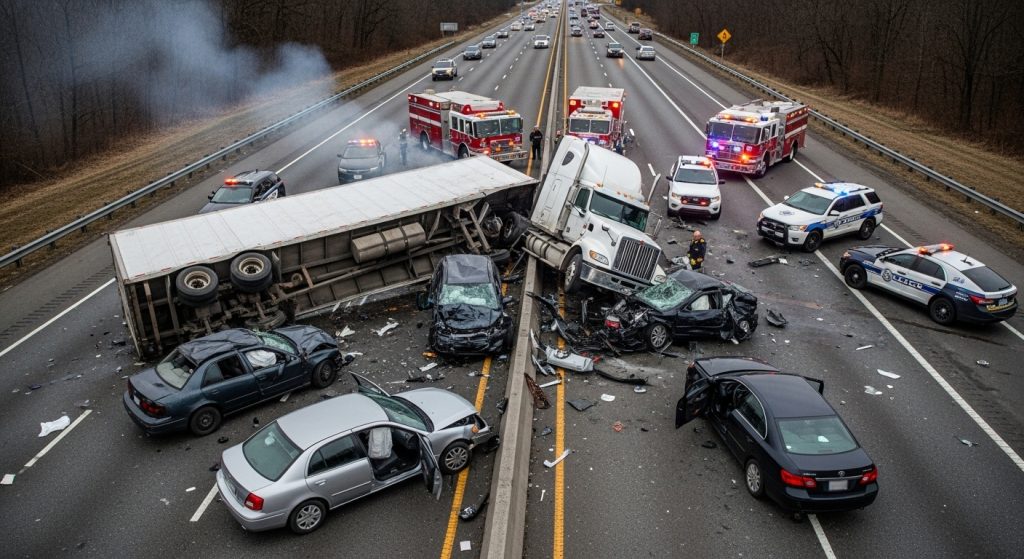
A car accident can be stressful. A truck accident, on the other hand, can flip your life upside down in seconds.
Commercial trucks weigh up to 80,000 pounds, carry hazardous cargo, log millions of highway miles every year, and are often operated by drivers under tight deadlines.
When something goes wrong, the damage is rarely minor.
Medical bills skyrocket, vehicles are totaled, workdays are lost, and insurance adjusters suddenly start calling—often before you’ve even left the hospital.
This is where many accident victims make a critical mistake: assuming a truck accident claim works like a regular fender-bender case.
It doesn’t.
Truck accidents involve federal regulations, multiple liable parties, complex insurance policies, and aggressive defense teams whose sole job is to minimize payouts.
Hiring the right truck accident lawyer isn’t just helpful—it can be the difference between a modest settlement and full, life-changing compensation.
Before you sign that contingency fee agreement, here are the 10 most important things to consider when choosing a truck accident lawyer—and why they matter more than you might think.
Duties of a Truck Accident Lawyer
A truck accident lawyer does far more than file paperwork or negotiate a settlement.
Their role is both that of a legal strategist and an investigator, especially in high-stakes commercial cases. Their key responsibilities include:
Investigating the crash thoroughly
- Reviewing police reports
- Securing black box (ECM/ELD) data
- Analyzing driver logs and maintenance records
Identifying all liable parties
- Truck driver
- Trucking company
- Cargo loaders
- Vehicle or parts manufacturers
Handling all insurance communications
- Protecting you from lowball offers
- Preventing recorded statements from being misused
Calculating true damages and litigating when necessary
- Medical expenses (current and future)
- Lost income and diminished earning capacity
- Pain, suffering, and emotional distress
- Filing lawsuits, retaining expert witnesses, and preparing for trial if negotiations fail
In short, a good truck accident lawyer doesn’t just react—they build a case from day one.
Is It Worth Hiring a Lawyer for a Commercial Truck Accident?
Short answer: Yes—almost always.
Truck accident claims are inherently stacked against victims because trucking companies and their insurers treat lawsuits as a routine cost of doing business, often deploying rapid-response legal and investigation teams to accident scenes within hours.
Going it alone is risky when trucking insurers typically carry $1–$5 million or more in coverage and assign highly trained adjusters whose job is to shift blame, minimize the seriousness of injuries, and push for fast settlements before the true, long-term impact of the crash is known.
On top of that, liability in truck accidents often hinges on Federal Motor Carrier Safety Administration (FMCSA) regulations, which are complex and unforgiving—miss a violation, and you may miss your strongest leverage for full compensation.
10 Things to Consider When Finding the Best Truck Accident Lawyer Near You
Statistics consistently show that represented claimants recover significantly more compensation than those who negotiate alone—especially in severe injury or wrongful death cases.
If the crash involved a commercial truck, hiring an experienced lawyer is not an expense—it’s a strategic investment. Here are a few most important things you should consider when hiring one.
1. Specific Experience With Truck Accident Cases
Not all personal injury lawyers are truck accident lawyers.
Truck cases require familiarity with:
- FMCSA regulations
- Hours-of-Service (HOS) violations
- Driver qualification files
- Maintenance and inspection requirements
Ask directly: “How many truck accident cases have you handled, and how many went to trial?”
2. Knowledge of Federal and State Trucking Laws
Commercial trucking is governed by both state law and federal regulations. A strong lawyer understands how violations like:
- Driver fatigue
- Improper cargo loading
- Equipment failure
- Logbook falsification
can establish negligence per se—a powerful legal advantage.
If your lawyer doesn’t mention FMCSA rules early in the conversation, that’s a red flag.
3. Ability to Identify Multiple Liable Parties
Unlike car accidents, truck crashes often involve layered liability.
Potentially responsible parties include:
- The driver (negligent driving)
- The trucking company (negligent hiring or supervision)
- A third-party maintenance contractor
- Cargo loaders
- Truck or parts manufacturers
More liable parties often mean more insurance coverage—and higher potential compensation.
4. Access to Accident Reconstruction Experts
Strong truck accident cases are built on evidence, not assumptions.
Top lawyers work with:
- Accident reconstruction engineers
- Medical experts
- Vocational economists
- Life-care planners
These experts help establish:
- How the crash occurred
- Who was at fault
- The long-term financial impact of your injuries
If a firm lacks expert resources, your case may lack leverage.
5. Willingness to Take the Case to Trial
Insurance companies know which lawyers settle cheaply—and which ones don’t blink at a courtroom.
A lawyer who prepares every case as if it’s going to trial:
- Commands better settlements
- Applies real pressure during negotiations
- Isn’t afraid of litigation when necessary
Ask: “When was the last truck accident case you actually took to trial?”
6. Clear and Transparent Fee Structure
Most truck accident lawyers work on a contingency fee basis, meaning:
- No upfront fees
- You pay only if they win
Make sure you understand:
- The percentage charged
- Litigation expenses
- Whether costs are deducted before or after settlement
A trustworthy lawyer explains fees clearly—no fine-print surprises.
7. Strong Communication and Accessibility
You shouldn’t feel like a case number.
A good lawyer:
- Returns calls promptly
- Explains legal concepts in plain English
- Updates you regularly on progress
If communication feels strained during the consultation, it won’t improve later.
8. Proven Track Record and Case Results
Past performance isn’t everything—but it matters.
Look for:
- Verdicts and settlements in truck accident cases
- Experience with catastrophic injuries
- Client testimonials and peer recognition
Results show whether a lawyer can handle pressure and complexity.
9. Local Knowledge with National Resources
Hiring a lawyer near you has advantages:
- Familiarity with local courts
- Knowledge of regional trucking routes
- Understanding of state-specific laws
But the best firms combine local presence with national-level resources, especially when battling large carriers.
10. Genuine Empathy and Client-First Mindset
This may sound subjective—but it’s critical.
Truck accidents often cause:
- Permanent disabilities
- Emotional trauma
- Family disruption
Your lawyer should care about your recovery, not just the case value. Compassion and professionalism can—and should—coexist.
Truck Accident vs. Car Accident Claims: A Quick Comparison
| Factor | Car Accident | Truck Accident |
|---|---|---|
| Vehicle Weight | 3,000–4,000 lbs | Up to 80,000 lbs |
| Governing Laws | Mostly state laws | State + FMCSA regulations |
| Liable Parties | Usually 1–2 | Often 3–5+ |
| Insurance Coverage | $25k–$100k typical | $1M–$5M+ |
| Case Complexity | Moderate | High |
| Need for Experts | Occasional | Almost always |
This table alone explains why specialized legal representation matters.

How a Truck Accident Lawyer Can Level the Playing Field Against Insurance Giants?
Trucking insurers are not just well-funded—they’re well-prepared.
A skilled truck accident lawyer:
- Stops insurers from contacting you directly
- Preserves time-sensitive evidence
- Uses violations to force accountability
- Counters delay tactics and blame-shifting
- Negotiates from a position of strength
Without legal representation, you’re negotiating against professionals who do this every single day.
With the right lawyer, the balance of power shifts.
Maximum Compensation: How a Truck Accident Lawyer Calculates Your True Damages
Insurance companies focus on what your claim costs today. Lawyers focus on what it will cost you over your lifetime.
Damages Typically Include:
Economic Damages
- Emergency and ongoing medical care
- Rehabilitation and physical therapy
- Lost wages
- Reduced earning capacity
- Future medical needs
Non-Economic Damages
- Pain and suffering
- Emotional distress
- Loss of enjoyment of life
- Loss of consortium
Punitive Damages (in some cases)
- Reckless conduct
- Drunk or fatigued driving
- Repeated safety violations
By working with medical and financial experts, a lawyer ensures nothing is left on the table.
Final Thoughts: Choosing the Right Lawyer Is Choosing Your Future
A truck accident doesn’t just disrupt your day—it can reshape your entire future.
Hiring the right truck accident lawyer means:
- Protecting your rights
- Preserving critical evidence
- Standing up to billion-dollar insurance companies
- Securing compensation that truly reflects your losses
Take your time. Ask hard questions. Trust your instincts.
Because when the stakes are this high, experience, preparation, and commitment aren’t luxuries—they’re necessities.