

Dodge Ram 5.9 Cummins engines come in two different varieties: the 12-valve and the 24-valve.
At first glance, they might look nearly identical on the outside, but under the hood their internals tell a different story.
Each version has its own strengths and weaknesses, and that’s exactly why the 12V vs. 24V debate is still alive in truck circles today.
So, which one is right for you? That depends on whether you lean toward raw, no-frills reliability or prefer the added refinement and power of newer tech.
In this blog post, we’ll take a closer look at the differences between the 12V and 24V Cummins turbodiesel engines to help you decide which one best matches your style, needs, and expectations behind the wheel.
Cummins 12v – Pros and Cons
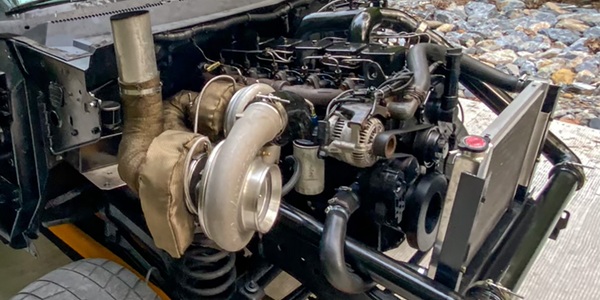
The 12-valve Cummins is a 5.9L engine that was produced from 1989-to 1998.
It was quicker and more powerful than the earlier 6BT engine, but it didn’t have the same longevity. These engines were also known for being quite loud.
Another advantage of the 5.9L Cummins engine is its simplicity. The engine was designed in an era when there were no endless electronics or complicated air intake systems.
As a result, the 12-valve Cummins is easy to work on and repairs are generally less expensive.
The P7100 injection pump is used in Cummins 12v engines, which is said to be more dependable than the Bosch VP44 injection pump.
We just want to make sure that everyone understands. When it comes to the Cummins 12V vs 24V debate, both are very trustworthy turbodiesel motors. There is a minor gap between the earlier 12v units.
The Cummins 12v is a reliable engine, however, like all engines, it will require regular maintenance and occasional repairs.
The most common problem with the 12v is the fuel injectors, which can become worn out and cause the engine to run rough.
In addition, the turbocharger can also cause problems, as it can become clogged with debris and lose its efficiency.
However, these problems are relatively easy to fix, and most mechanics will be familiar with the 12v.
Cummins 24v – Pros and Cons
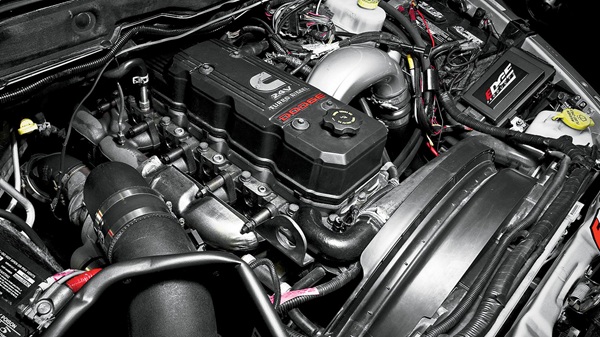
The 24-valve Cummins is a 5.9L engine that was produced from 1998-to 2007.
It’s an updated version of the 12-valve engine and was available in the Dodge Ram 2500/3500 trucks.
This engine is quieter and more powerful than the 12-valve, and it has a longer lifespan.
The 5.9L Cummins engine is still a strong engine overall. Many enthusiasts give the older 12v a slight edge, however, the 24v has benefits as well. For one thing, in stock form, it produces greater output.
This is an advantage for individuals who don’t want to modify or upgrade the 5.9 Cummins engine. The 24v Cummins is also a more recent motor and truck in general.
They offer additional features, better interior quality, and so on.
Keep in mind that the 24v was only available for a few years, so they can be more difficult to find and parts may be more expensive.
Overall, designed for durability and performance, the 24v engine is available in a wide range of horsepower options, making it a good choice for a variety of applications.
In terms of reliability, the 24v engine has a proven track record, with many owners reporting years of trouble-free operation.
12V vs. 24V Cummins: Key Differences
The 12-valve Cummins is the classic workhorse—rugged, purely mechanical, and beloved by old-school diesel fans.
Known for its simplicity and near-indestructible build, it’s easy to tune and maintain without relying on complex electronics.
It’s the kind of engine you can wrench on in your own garage, which is why it holds a special place among backyard mechanics and performance enthusiasts.
The 24-valve Cummins, by contrast, marked a step toward modernization.
With the addition of electronic controls, improved airflow, and more horsepower, it delivered smoother drivability and better efficiency—all while retaining the durability that made the Cummins name legendary.
For drivers who wanted a blend of modern refinement and raw diesel power, the 24V became the natural choice.
At their core, the main differences between the two engines come down to three areas:
- Valves per Cylinder: The 12V runs two valves per cylinder, while the 24V doubles that to four, allowing for better airflow and combustion.
- Fuel Delivery: The 12V relies on a mechanically governed Bosch injection pump, whereas the 24V uses an electronically controlled injector system for more precise fuel management.
- Turbocharger Setup: The 12V traditionally comes with a single turbocharger, while the 24V was offered with a more advanced turbo system that improved response and efficiency.
12V vs. 24V Cummins: Specs Comparison
| Feature | 12-Valve Cummins (5.9L) | 24-Valve Cummins (5.9L ISB) |
|---|---|---|
| Production Years | 1989 – 1998 | 1998 – 2007 |
| Valves per Cylinder | 2 | 4 |
| Fuel System | Mechanical Bosch P7100 injection pump | Electronically controlled unit injector (HEUI) |
| Turbocharger | Single | Single (advanced design, better airflow) |
| Horsepower (Stock) | ~160–215 hp | ~245–325 hp |
| Torque (Stock) | ~400–460 lb-ft | ~420–610 lb-ft |
| Maintenance | Simple, easy to repair, less expensive | Slightly more complex, repairs can be costlier |
| Reliability | Legendary durability, proven for high-performance builds | Very reliable, modern improvements but slightly more electronics involved |
| Performance Potential | Excellent for extreme performance builds (800+ WHP possible) | Great for modest to moderate builds, easier tuning |
| Driving Experience | Raw, mechanical feel, louder | Smoother operation, better drivability |
| Aftermarket Support | Extensive | Extensive |
| Best For | DIY enthusiasts, high-performance builds, classic diesel feel | Everyday driving, modern upgrades, long-term reliability |
12v vs 24v Cummins: Which One is Better?
Cummins is a global leader in diesel engine design and manufacturing, known for building engines that are both powerful and dependable.
Backed by excellent customer support and a network of factory-trained technicians, owning a Cummins engine comes with peace of mind.
When it comes to Dodge Ram 5.9 Cummins engines, the 12-valve and 24-valve versions are the most popular choices for heavy-duty trucks, each with its own strengths.
The 12-valve Cummins is celebrated for its raw power and simplicity.
Built in an era before complex electronics and emissions equipment, it’s easy to maintain, easy to repair, and perfect for enthusiasts who enjoy tinkering in the garage.
Early 12V 6BT engines earned a legendary reputation for their performance, reliability, towing capability, and aftermarket potential.
Its mechanical design and rugged construction make it a favorite for high-performance builds, even those pushing 800+ wheel horsepower.
The 24-valve ISB 5.9 Cummins, while newer, is no less impressive. It comes with electronic fuel controls, better airflow, and higher factory performance.
The 24V is generally easier to tune and offers plenty of potential for modest performance builds.
While it may have a few more expensive maintenance considerations compared to the 12V, it benefits from modern engineering and is known for strong reliability over the long term.
Ultimately, there’s no definitive “better” engine—it depends on your priorities.
If you value simplicity, raw power, and DIY-friendly maintenance, the 12V is hard to beat. If you prefer modern features, smoother performance, and slightly easier tuning for everyday driving, the 24V is an excellent choice.
Both engines have proven themselves as dependable turbodiesels, making either a solid option depending on your truck goals.